
Water Sort Puzzle - Sort Color
Guru Puzzle GamePuzzle
4.89.94K Reviews
- Version
- 5.6.0
- Installs
- 50.00M
- Age Rating
- Everyone
Screenshots
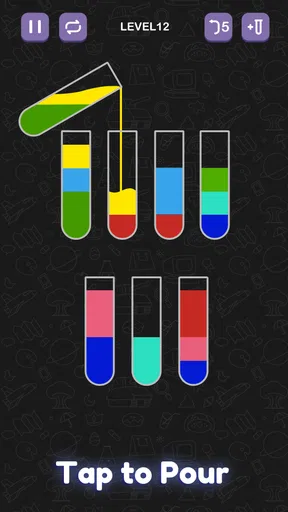
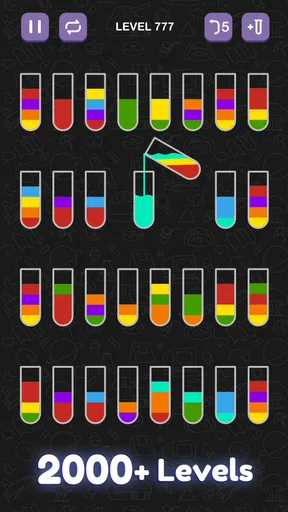
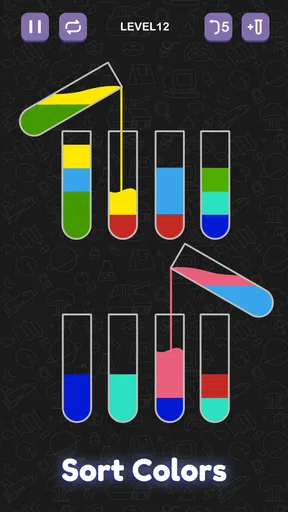
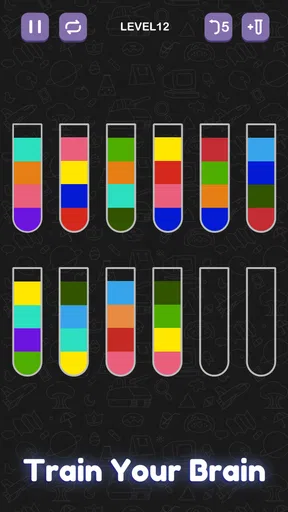
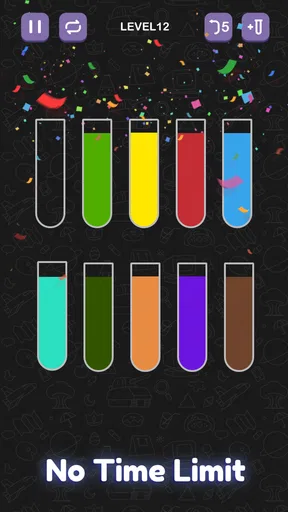
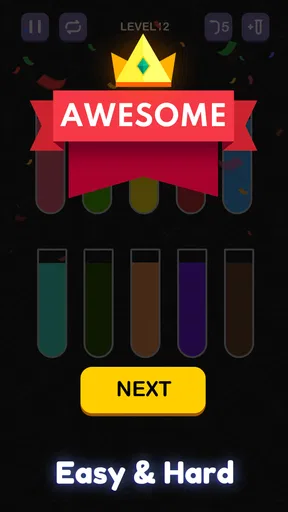
Our Review of Water Sort Puzzle - Sort Color
 Analysis by Appyee
I find Water Sort Puzzle - Sort Color easiest to understand when I want a quiet puzzle rather than a game that demands constant attention. The basic task is simple: move liquid between tubes until each tube contains a single color. That sounds almost too modest, but the changing arrangements create enough planning to keep the experience interesting. It is a free puzzle game from Guru Puzzle Game, aimed at Everyone, and it works without Wi-Fi, which makes it particularly convenient for short offline sessions.
What stood out to me was not a huge feature list, but how quickly the game explains itself through the play area. I did not need a long tutorial or a complicated menu before making useful moves. The calm presentation and liquid-pouring sounds also give it a sensory identity that separates it from a standard number puzzle. At the same time, that simplicity means it will not satisfy someone looking for a story, competitive multiplayer, or a deep progression system.
How Water Sort Puzzle feels to use in different situations
I find the game’s best quality is how easily its straightforward sorting puzzle fits around the rest of the day. In this section, I’ll look at how that same simple rhythm changes when I have only a minute, a longer quiet break, or a less-than-ideal place to play. Those situations also reveal where its calm design helps—and where it asks for more attention than I might have expected.
Readable rules and straightforward navigation
The strongest part of the experience is its visual clarity. Each tube presents the current state of the puzzle directly, and the colors make the next possible actions easy to recognize. I can usually understand what is available at a glance: which tube has room, which color can be combined, and which move might open space for a later sequence. This is much less mentally cluttered than many puzzle games that surround the board with missions, currencies, character panels, and several competing objectives.
The interaction also follows a natural rhythm. I select a tube, choose where the liquid should go, and watch the result. That direct relationship between action and outcome helps new players settle in quickly. It is useful for someone who does not enjoy learning elaborate control schemes, and it makes the game approachable for occasional players who may only open it for a few minutes at a time.
Navigation outside the puzzle is similarly uncomplicated in my experience. The game is built around returning to the next sorting challenge rather than making me search through layers of content. That matters for people who find dense interfaces tiring or who prefer an app that communicates through a small number of obvious choices. The uncluttered structure is one reason I would recommend trying it before more feature-heavy alternatives in the puzzle category.
There is a trade-off, though. A clean interface can also feel sparse. Players who depend on extensive written instructions, detailed explanations of every rule, or a strong sense of narrative context may find the presentation too minimal. The puzzle communicates mainly through color, position, and movement, so it is not designed around long-form text guidance.
Color, sound, and the physical effort of play
The game’s main visual demand is distinguishing colored liquid. That is central to the challenge, not a decorative detail. For players with difficulty separating similar colors, a level can become harder for reasons unrelated to planning. I would approach the game with that limitation in mind: its core information is carried by color, and the experience may be less comfortable if color recognition is unreliable or if the display is difficult to read.
The tubes and their contents are large enough for me to follow the board without feeling that every move requires close inspection, but comfort will still depend on the device and the player’s vision. A small phone screen, strong reflections, dim lighting, or fatigue can make a color-focused puzzle less pleasant. I found it better suited to a clear, stable viewing position than to hurried play while walking or moving between tasks.
The pouring sounds are a pleasant part of the presentation for me. They add a soft, tactile feeling to each successful move and explain why the game can feel almost meditative. However, sound is not automatically helpful for everyone. Some players may prefer silence, may be sensitive to repeated audio cues, or may be playing in a shared space. The puzzle remains understandable through its visual board, so I can treat the sound as atmosphere rather than something I need in order to solve the levels.
On the motor side, the controls are relatively light. I am tapping rather than dragging objects through a complicated path, and the game does not ask me to perform fast combinations. That makes it more comfortable than action-oriented games for people who prefer slower, deliberate input. Even so, accurate tapping still matters. If someone has difficulty making precise selections on a touchscreen, choosing a narrow tube or correcting an unintended move may become frustrating.
One practical tip is to slow down before committing a move. The game rewards planning more than speed, so I do not gain much by tapping rapidly. Keeping the phone steady, using one hand only when comfortable, and taking a short pause to inspect the empty spaces can reduce accidental selections. This is a small adjustment, but it changes the game from a fussy tapping exercise into a more controlled visual puzzle.
Why the offline design helps in everyday life
The ability to play without Wi-Fi is one of the most useful parts of the package. I can use it during a commute, in a waiting room, or somewhere with unreliable reception without treating the game as a data-dependent activity. A realistic use case is a short appointment delay: I can open a level, solve a few moves, and put the phone away without needing to reconnect or remember a complicated online session.
That offline quality also makes the game suitable for people who want a predictable break from social feeds. There is no need to follow a live event or coordinate with another player. I can choose my own pace and stop when my attention runs out. For someone who becomes overwhelmed by notifications, chat, or competitive pressure, this quieter structure may be a meaningful advantage.
It is not equally suitable for every context. Although the game is calm, it still needs visual attention. I would not use it while driving, crossing a road, or handling equipment. On public transport, I would wait until I was seated because an unexpected movement could lead to an accidental tap. The offline feature improves availability, but it does not remove the need for a safe playing situation.
The age classification is Everyone, which matches the nonviolent, easy-to-understand nature of the puzzle. I could see it working for a broad household audience, especially when someone wants a gentle activity that does not depend on reading a long story or understanding complex fictional systems. Still, an Everyone rating does not mean every person will find color sorting equally accessible. The central visual mechanic remains the deciding factor.
What the puzzle teaches about planning
At first, I can solve many boards by following the obvious matching move. Later, the more important skill is protecting empty space. An open tube is not merely a storage place; it is a temporary tool that lets me separate colors and reach a deeper layer. If I fill every available space too quickly, I can leave myself with no useful route, even when the board looked nearly solved a moment earlier.
This creates a useful mental routine. I look for a move that exposes a color, then check whether the destination will remain helpful afterward. I also try to avoid burying a color that I will need to access again. Thinking one or two moves ahead is often more valuable than chasing the largest immediate match. That makes the game a good fit for someone who enjoys gentle logic practice without the pressure of a timer.
Another practical insight is that I should treat a temporary move as part of the solution rather than as wasted progress. Moving liquid away from its eventual destination can create the room needed to finish the arrangement. This is where the game becomes more interesting than simply grouping identical colors. The board asks me to manage space, order, and reversibility at the same time.
That said, the challenge is still deliberately narrow. It develops patience and visual planning, but it is not a replacement for a broad brain-training program, a word puzzle, or a traditional Sudoku app. If I want variety across memory, language, arithmetic, and deduction, another puzzle collection would serve me better. This game’s appeal comes from refining one clear idea rather than covering every kind of mental exercise.
Where it sits beside other puzzle choices
Compared with Sudoku, this game feels more physical and immediate. Sudoku gives me a grid of symbols and a rule system that usually depends on written or numerical relationships. Here, the board changes through pouring, and the progress is visible in the tubes themselves. I prefer Water Sort Puzzle when I want a puzzle I can understand almost instantly; I prefer Sudoku when I want a longer, more formal deduction process.
Compared with match-three games, it is less frantic and less dependent on quick pattern recognition. There is no need to chase a rapidly changing board or react before an opportunity disappears. That makes it friendlier to deliberate players, but less exciting for someone who enjoys constant motion, special effects, and escalating action. The absence of a strong competitive layer is a benefit for relaxation and a weakness for players who need external excitement to stay engaged.
Compared with large puzzle compilations, the focused design is both its strength and its limitation. I spend less time deciding what mode to launch, but I also have fewer kinds of problems to switch between. If I expect a single app to provide word games, physics challenges, crossword puzzles, and logic grids, this will feel too specialized. If I want one repeatable sorting mechanic that works offline, the specialization feels intentional rather than incomplete.
Commercial friction and long-session limits
The game is free to download and play, which lowers the barrier to trying it. In-app purchases are listed at $7.99 per item, so I would check the purchase flow carefully before handing the phone to a child or another family member. The presence of optional spending does not change the core appeal for me, but it is still part of the decision for anyone seeking an entirely purchase-free environment.
Another limitation is repetition. The central action remains sorting colored liquid, and even a well-designed sequence can begin to feel familiar during a long session. I enjoy it more when I use it as a short reset than when I try to play continuously for a large block of time. Taking a break after a difficult board helps preserve the relaxing quality and prevents the same visual pattern from becoming monotonous.
Difficulty can also feel personal. Some players will find the early puzzles almost effortless, while others may need more time to understand how temporary storage works. The game is therefore better at offering a smooth entry point than at guaranteeing the same level of challenge for everyone. I would skip it if I wanted a clearly structured competitive ladder or a puzzle experience built around constant novelty.
The current version is 5.6.0, and the game supports devices running Android 7.0 or later. That makes the technical entry point reasonably broad for compatible Android users, though anyone with an older device should check compatibility before planning to rely on it. Since the game’s main attraction is its simplicity, I would not choose it for advanced hardware features; I would choose it because the basic interaction is easy to pick up.
Who I would recommend it to
I would recommend it to people who like calm, self-paced logic games, especially those who want something available during offline moments. It is a good match for a player who enjoys organizing visual information, can distinguish the colors comfortably, and does not need a story or social competition to stay interested. It also suits short sessions better than many games that demand a lengthy commitment before progress feels meaningful.
I would be more cautious recommending it to anyone who struggles with color-based information, finds repeated sound cues uncomfortable, or needs large amounts of text and explicit instruction. I would also point competitive players toward a different puzzle game if their motivation comes from rankings, live opponents, or fast reactions. This is not a criticism of the design; it is a reminder that the game’s narrow focus will be a benefit for some people and a barrier for others.
With an average rating of 4.8 from around 593 thousand ratings and more than 50 million installs, it is clearly a widely used puzzle title. Those figures suggest strong general appeal, but they do not replace personal fit. I would still judge it by the questions that matter in daily use: Can I read the colors comfortably? Do I enjoy slow planning? Will I be happy repeating the same kind of challenge? For me, the answer is yes when I want a quiet break, but not when I am looking for variety.
My inclusive verdict
After spending time with it, I see Water Sort Puzzle - Sort Color as a thoughtfully focused game rather than an all-purpose puzzle platform. Its readable board, gentle controls, offline play, and optional sound make it easy for me to use in ordinary situations. The best accessibility quality is its low cognitive and motor complexity: I can understand the goal quickly and solve at my own pace.
The remaining barriers are equally clear. Color is essential, precise tapping still matters, and repeated visual sorting may not suit players who need broader stimulation. The purchase option also deserves attention in shared-device situations. I would not describe the game as universally accessible, but I would describe it as approachable for many people who want a simple, quiet puzzle with minimal navigation.
My recommendation is to try it when you want a calm offline activity, not when you need variety, competition, or a text-led puzzle. Guru Puzzle Game has built the experience around one mechanic and made that mechanic easy to enter. For a few thoughtful minutes between everyday tasks, that focus works very well; for a long-term main game, its limited range may eventually show.
Verdict
Strengths of Water Sort Puzzle - Sort Color
- Simple rules make it easy to start playing immediately.
- Relaxing gameplay works well for short breaks or casual sessions.
- Colorful visuals make the liquid sorting process easy to follow.
- Gradually harder levels provide a steady sense of progression.
- Offline play is convenient when you have no internet connection.
Limitations of Water Sort Puzzle - Sort Color
- Later puzzles can feel repetitive after extended play sessions.
- Some levels may require undoing moves or restarting from the beginning.
- Hints or extra moves may be limited unless you watch ads or pay.
- Frequent advertisements can interrupt the flow between puzzle levels.
- The game offers little variety beyond its core sorting mechanic.
Other Releases by Guru Puzzle Game
View All
Ball Sort Puzzle - Color Game
Puzzle4.9


Differences - Find & Spot It
Puzzle4.9

Goods Puzzle: 3D Sorting Games
Puzzle4.9
Similar Picks in This Category
View All
Block Blast!
HungryStudio4.8

Braindom: Brain Games Test
Lahana Game Studio4.6

AMAZE!
CrazyLabs LTD4.6

Sudoku - Classic Sudoku Puzzle
Oakever Games4.7

Art Puzzle - Puzzle Games
Easybrain4.8

Amaze GO!
Oakever Games4.9
Frequently Asked Questions
What is Water Sort Puzzle - Sort Color?
Water Sort Puzzle - Sort Color is a casual sorting game in which you pour colored liquid between bottles until each bottle contains only one color. The rules are simple, but later levels require careful planning, logical thinking, and attention to the available empty containers. It is designed for short relaxing sessions, although some puzzles can become surprisingly challenging.
How do you play Water Sort Puzzle - Sort Color?
To play, tap a bottle to select it and then tap another bottle to pour the liquid. You can usually pour only onto the same color or into an empty bottle, and the destination must have enough space for the selected liquid. The objective is to separate all colors correctly. Thinking several moves ahead helps prevent blocking useful bottles.
Is Water Sort Puzzle - Sort Color free to download and play?
The game is generally available as a free download, allowing players to access its core sorting puzzles without purchasing the app first. However, free versions may include advertising, optional rewards, or in-app purchases depending on the platform and release. Before downloading, check the store listing for current pricing, advertisements, and purchase information.
Does Water Sort Puzzle - Sort Color work offline?
Many of the basic puzzles can typically be played without a constant internet connection, which makes the game convenient for travel, waiting rooms, or other situations with limited connectivity. Internet access may still be required for advertisements, cloud features, updates, or optional rewards. Offline availability can vary by version, so confirm the current store description.
Is Water Sort Puzzle - Sort Color suitable for children and casual players?
The game is easy to understand and does not require fast reactions, making it suitable for casual players and many children. Its main challenge is logical planning rather than action gameplay. Parents should still review the app’s age rating, advertising, and possible in-app purchases, since these details can differ between Android and iOS versions and may change after updates.
Play our best games!


